
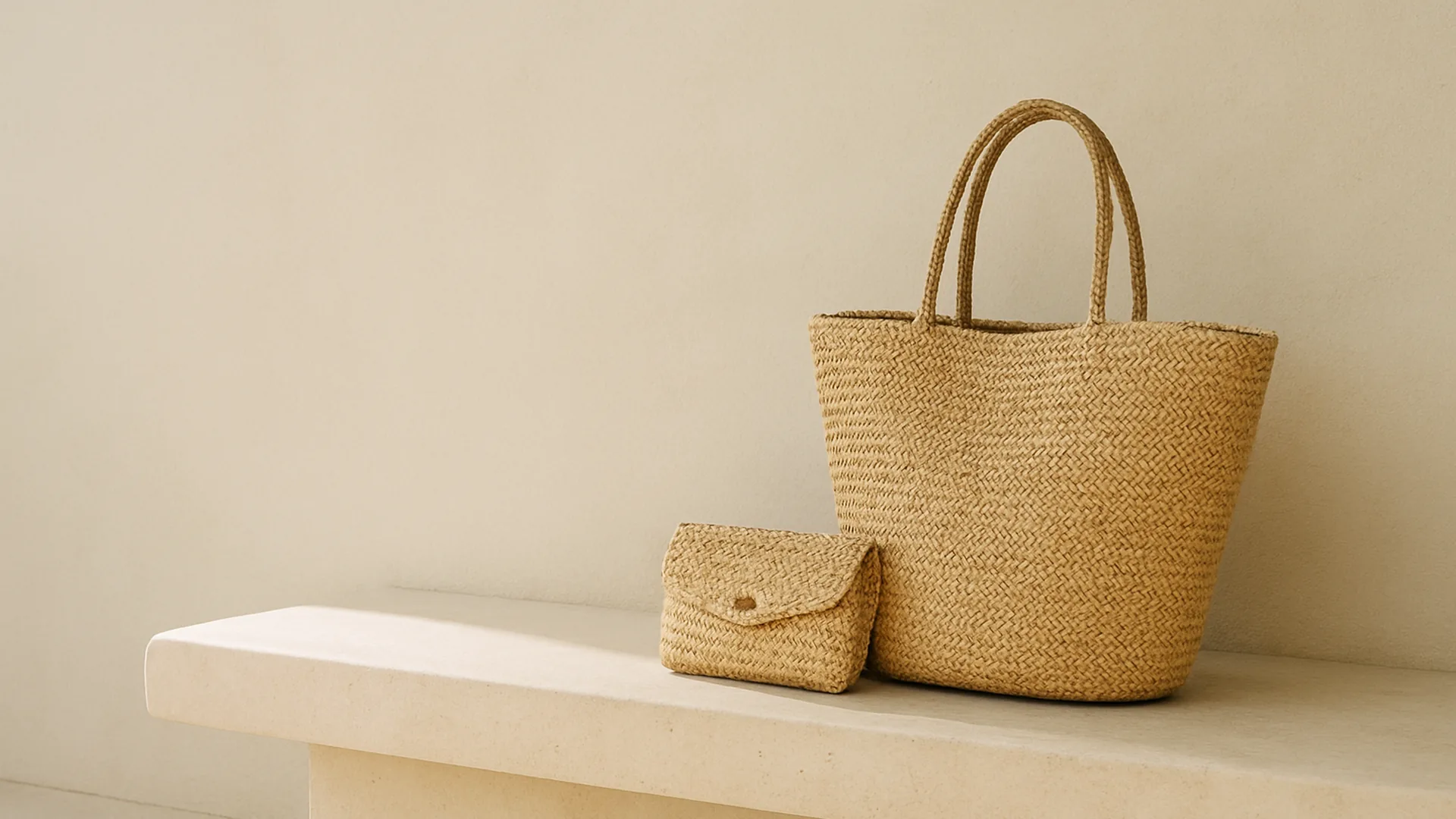
Raffia and Straw Handbag Guide
Main shapes from totes to clutches, and where each style suits best.

What a Raffia Bag Is
A raffia bag is identified by its plant-based fiber and the way that fiber is formed into a flexible surface.

Main Styles of Raffia Bags
The main styles of raffia bags differ in their opening, proportions and way of carrying, so the silhouette helps determine what fits and where the bag feels practical.

How Raffia Bags Wear Over Time
Raffia bags are light to carry, but their woven surfaces respond to weight, friction, sunlight, and moisture.
What a Raffia Bag Is
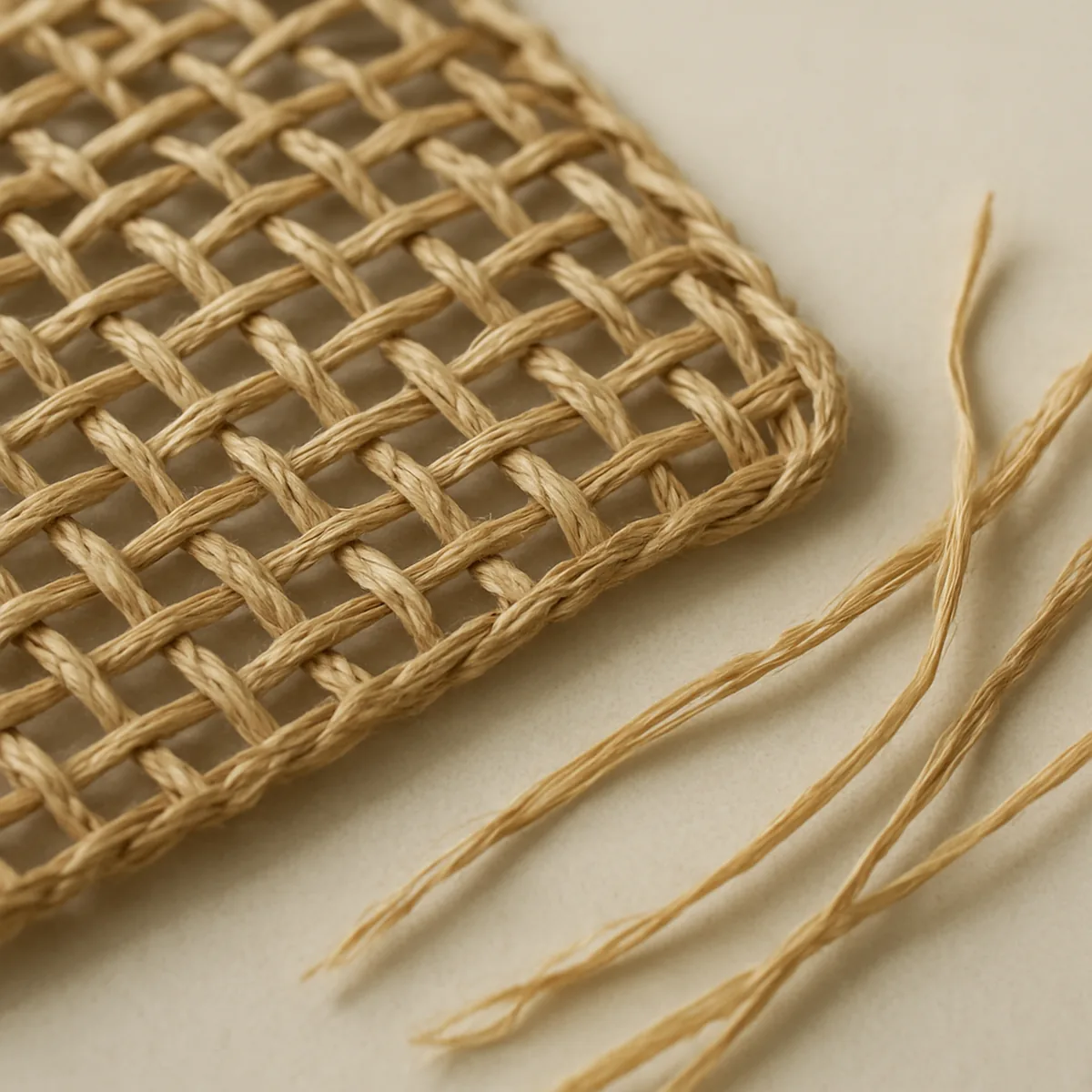
A raffia bag is identified by its plant-based fiber and the way that fiber is formed into a flexible surface. The material may appear as a fine, close weave or as thicker strips arranged in an open pattern. Terms such as straw, paper yarn, and synthetic raffia can describe different fibers, even when finished bags look similar. Construction also varies: some makers weave or braid the material, while others crochet it into a fabric-like form. Knowing the fiber and construction helps distinguish natural raffia from lookalike materials.
Raffia Fiber and Where It Comes From
Raffia is a natural fiber taken from the leaves of raffia palms, rather than from a grass stem or a woody cane. Natural raffia handbags commonly use fiber from Raffia farinifera, a palm native to Madagascar and an important source of commercial raffia.
- Natural raffia: Long, narrow strips are separated from palm leaflets; their slight irregularity and matte surface remain visible in many woven bags.
- Grain straw: Straw comes from the dried stalks of cereal crops such as wheat or rye, so it is botanically and structurally different from palm-leaf raffia.
- Rattan: Rattan is a climbing palm with solid, woody stems used as cane; raffia is a leaf fiber that can be split into flexible strips.
- Paper yarn: Paper raffia is made by cutting or twisting paper into yarn, producing a separate, generally lighter material rather than natural palm-leaf fiber.
- Synthetic imitations: Plastic or other manufactured strands may mimic raffia’s color and texture, but they contain no natural palm-leaf fiber.
These materials can share a tan color and woven appearance, but their source and structure differ: raffia begins as a palm leaf, not grain stalk, cane, paper, or plastic.
How Raffia Bags Are Made
Making a handwoven raffia bag starts with preparing usable strips from palm leaves. The maker’s choice of strip width, moisture, and technique affects how closely the material can be worked into a finished surface.
- Leaflets are stripped or split lengthwise to separate the long fibers; makers select strips for the intended work, setting aside coarser pieces for heavier sections.
- The strips are dried before construction, reducing their moisture and making them easier to store and handle; drying conditions influence flexibility during later work.
- Color may be added with dye before or during preparation, allowing dyed strands to be arranged into patterns; undyed raffia retains its natural pale-to-golden tones.
- In hand weaving, strips cross over and under one another on a form or between supports, creating a surface whose density depends on spacing and tension.
- Crocheting uses a hooked tool to pull raffia through successive loops, forming a continuous fabric; braiding twists several strips together before they are joined or sewn.
- Some makers shape panels separately and stitch them together, while others build a bag continuously; seams and joins determine where the material changes direction.
- A fabric lining is fitted inside as a separate layer, and leather trims may reinforce attachment points or finish edges; both add steps beyond forming the raffia body.
These methods produce different construction details: woven panels show crossing strands, crochet creates visible loops, and braided sections have a twisted profile. Lining and leather components are attached to the raffia structure rather than changing the fiber itself.
Main Styles of Raffia Bags
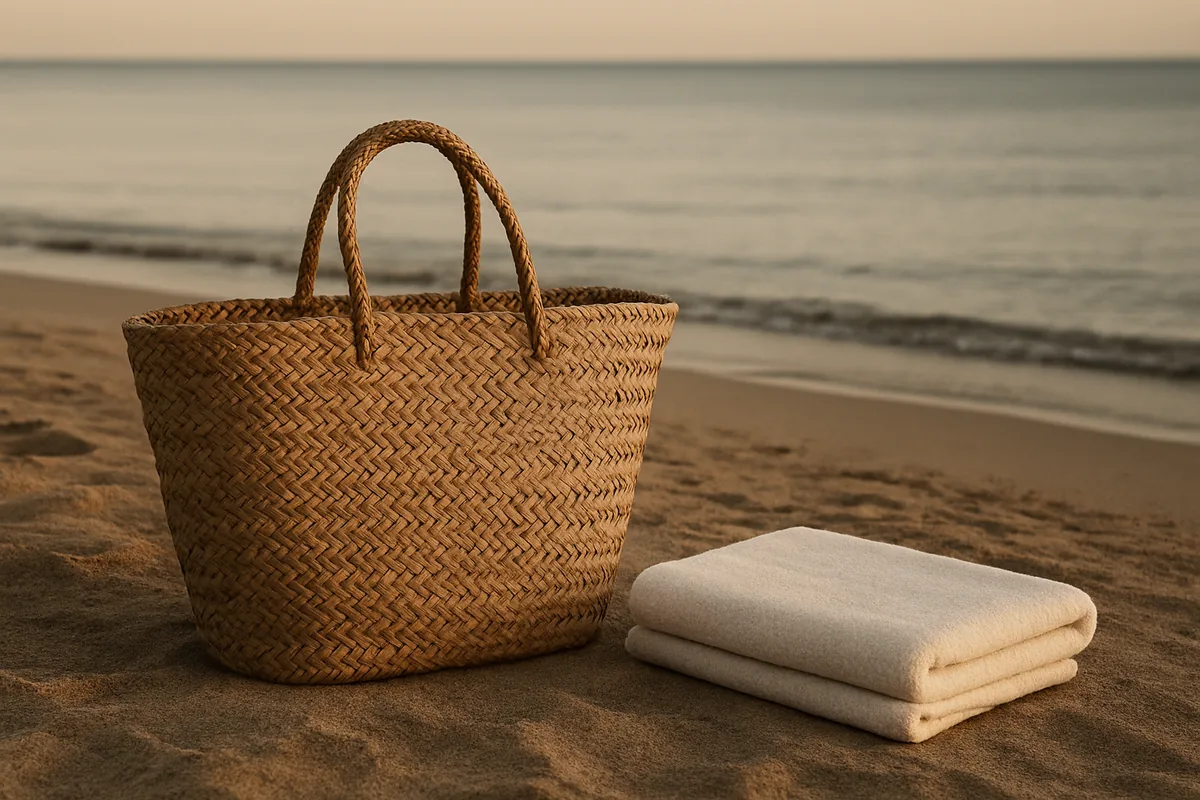
The main styles of raffia bags differ in their opening, proportions and way of carrying, so the silhouette helps determine what fits and where the bag feels practical. A broad tote is made for more than a phone and wallet, while compact shapes keep a short outing’s essentials close. Capacity depends on the cut and dimensions, not on the fiber itself. The examples below compare typical uses; actual space varies between individual designs.
Totes and Shoppers
Totes and shoppers have a broad opening and a roomy body, making them useful for items that do not fit neatly into a small purse: a book, sunglasses case, water bottle or light layer. Short handles hold the bag in the hand or over the forearm; longer handles let it sit at the hip or higher against the side when carried over the shoulder. Check the handle drop against your preferred coat or clothing, since a full bag needs enough clearance to slide on comfortably.
Use this rough capacity comparison as a guide; proportions and gussets change the space available, and the fiber does not set the volume.
| Shape | Typical capacity | Best use |
|---|---|---|
| Tote or shopper | About 10–20 L; book, bottle, light layer | Market trips, travel days, or carrying several personal items |
| Crossbody or shoulder bag | About 2–6 L; phone, wallet, keys, small pouch | City walks and errands when you want essentials close |
| Bucket bag | About 4–10 L; bottle, sunglasses case, compact cardigan | Casual outings with contents that vary through the day |
| Clutch or mini | About 0.5–2 L; phone, cards, keys, lipstick | Brief outings or occasions with a short essentials list |
For shopping or a day that calls for extra layers, choose a wider base and enough handle drop for shoulder carry. A smaller shopper is easier to manage when the load is limited to a book and a few daily essentials.
Crossbody and Shoulder Bags
A crossbody strap runs diagonally from one shoulder to the opposite hip, distributing the bag across the torso and leaving both hands free. A shoulder strap hangs from one shoulder, with the bag resting under the arm or at the side; it is quicker to slip on and off, but may shift when walking briskly. Adjustable straps allow the body position to be set higher for a close fit or lower for easier access.
These smaller silhouettes usually suit a phone, slim wallet, keys, sunglasses and a compact pouch. Before choosing one, check that the opening can fit the phone you carry and that the strap length leaves room over a jacket. A round raffia crossbody bag can keep a few essentials together without the footprint of a tote, while a more elongated shoulder style often gives easier access to a wallet or sunglasses case.
Choose crossbody carry for a long city walk, a crowded market or a commute where hands-free movement matters. A shoulder bag suits a café stop, a short errand or an outing where you expect to remove the bag often. For a light load, both work well; for bulky items, the compact body can become awkward to close or reach into.
Bucket Bags
A bucket bag has a rounded or oval base and sides that rise to a relatively wide opening. It may close with a drawstring threaded through the upper edge, or have an open top; the former gathers the rim around the contents, while the latter gives quicker access. Some designs add a flat base or an interior pocket to help small items stay easy to find.
The shape can take everyday items such as a phone, wallet, keys, sunglasses and a small water bottle, depending on its depth and width. A drawstring bag also accommodates a light scarf or a few irregularly shaped purchases more readily than a narrow, rigid silhouette. That flexible capacity is useful when the load changes during a market visit or a day with several stops, but it does not make every bucket bag large: a shallow model may hold only a compact essentials set.
Most bucket bags hang from a single shoulder strap, with the body resting around the hip; a longer strap can position it lower or allow crossbody carry. The rounded base tends to sit away from the body, so check the strap drop and how the bag moves as you walk. Choose an open top for frequent access on a relaxed outing, or a drawstring closure when you want the opening gathered around a mixed load.
Clutches and Minis
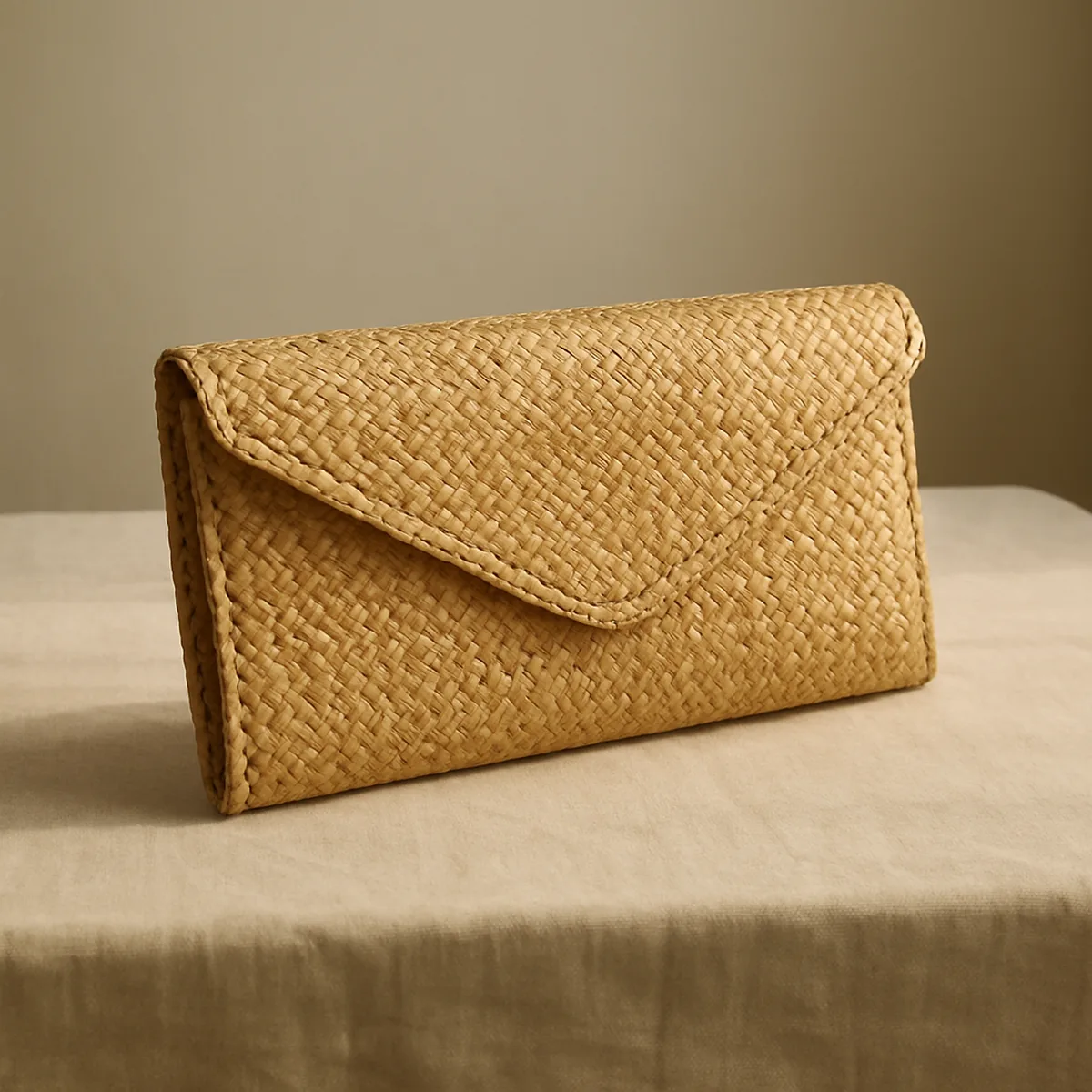
Clutches and mini bags are designed for a short essentials list rather than a full daily load. Depending on the proportions, they may fit a phone, card case, keys and one small cosmetic item; measure your phone against the opening if the design has a narrow frame. A hand-held clutch has no long strap, while a short wrist or shoulder strap keeps it secure without changing its compact scale.
A rigid frame gives the bag a defined outline and keeps its opening in a set shape, which can make small contents easier to locate. A soft woven body bends and slouches around what is inside, so its usable space may feel less fixed even when the exterior dimensions are similar. The difference is structural: neither style automatically holds more, and the cut and opening still determine what fits.
Choose a framed clutch for an occasion when you want a neat profile and only a few essentials. A soft mini with a short strap is more convenient for a brief walk, a dinner or an event where you may need a hand free. These shapes are less suited to bulky sunglasses cases, large wallets or spare layers; carrying only the items needed for the outing keeps the closure and outline manageable.
How Raffia Bags Wear Over Time
Raffia bags are light to carry, but their woven surfaces respond to weight, friction, sunlight, and moisture. The way a bag holds its shape depends partly on how tightly its strands are woven and how its edges and handles are finished. Regular use can gradually soften the weave or disturb exposed fibers, especially where the bag rubs against clothing or surfaces. A few careful habits help preserve its appearance and shape without treating the natural fiber as waterproof or machine washable.
Strength and Weight
Raffia is notably light, so a bag can feel easy to carry even when its body is broad. That low weight does not mean every woven bag is suited to the same load: a dense, closely worked weave usually holds its outline better than a loose, flexible one, while handles and attachment points also affect how weight is carried.
For daily use, distribute belongings rather than placing several heavy objects in one corner. A water bottle or a few books can pull unevenly on the base and make a soft body sag; repeated overloading may stretch the weave or strain the points where handles meet the bag. A firm base helps support contents, but it does not give the fiber an unlimited carrying capacity.
Friction is a separate source of wear. Edges and corners that repeatedly brush against a desk, car seat, or rough clothing can loosen or raise individual strands over time. Check these contact points occasionally and avoid dragging the bag across abrasive surfaces. For raffia bag durability in everyday rotation, moderate loads and careful placement matter more than the bag’s light feel suggests.
Sun, Water and Humidity
Strong, prolonged sunlight can fade raffia, particularly where the same side of a bag is repeatedly exposed. Color change may appear uneven if one panel faces a sunny window or the bag is left outdoors for long stretches. When not in use, keep it out of direct sun rather than relying on a dark color to conceal fading.
Raffia is not waterproof. Rain, splashes, or a damp surface can leave the woven fibers wet, and moisture may alter the bag’s shape while it dries. High humidity can also keep a woven surface damp for longer, especially in a packed closet or closed storage space. Avoid setting the bag on wet ground or carrying it unprotected in heavy rain.
If the bag gets wet, gently blot the surface with a clean, absorbent cloth; do not wring or press the weave flat. Let it dry naturally at room temperature, away from radiators, hair dryers, and direct heat, which can dry the fibers unevenly. Keep the bag open and give the weave room for air to circulate until it feels dry throughout.
Everyday Care
Simple handling helps limit surface wear and keeps the bag ready for its next use. Keep raffia dry, clean it gently, and store it with support rather than compressing the woven body.
- Lift the bag by its handles instead of pulling it across a floor or rough tabletop, where repeated contact can catch strands along the base and corners.
- After use, empty crumbs and small items, then leave the bag open in a dry, ventilated room if its interior feels warm or slightly damp.
- Remove loose dust with a clean, soft, dry brush, working lightly across the weave so the bristles do not snag exposed fibers.
- For a small surface mark, use a barely damp cloth and blot gently; avoid scrubbing, which can roughen the weave or disturb its alignment.
- Do not soak a raffia bag or put it in a washing machine; agitation and prolonged water exposure can distort the woven structure.
- Before storage, fill the body loosely with clean tissue paper to support its shape, then place it on a shelf without heavy items on top.
Choose a dry storage spot away from direct sunlight and damp walls, and leave enough space around the bag to prevent crushing. Replace the tissue if it becomes compressed, so the body stays supported without being stretched.
Where to Go Next in This Guide
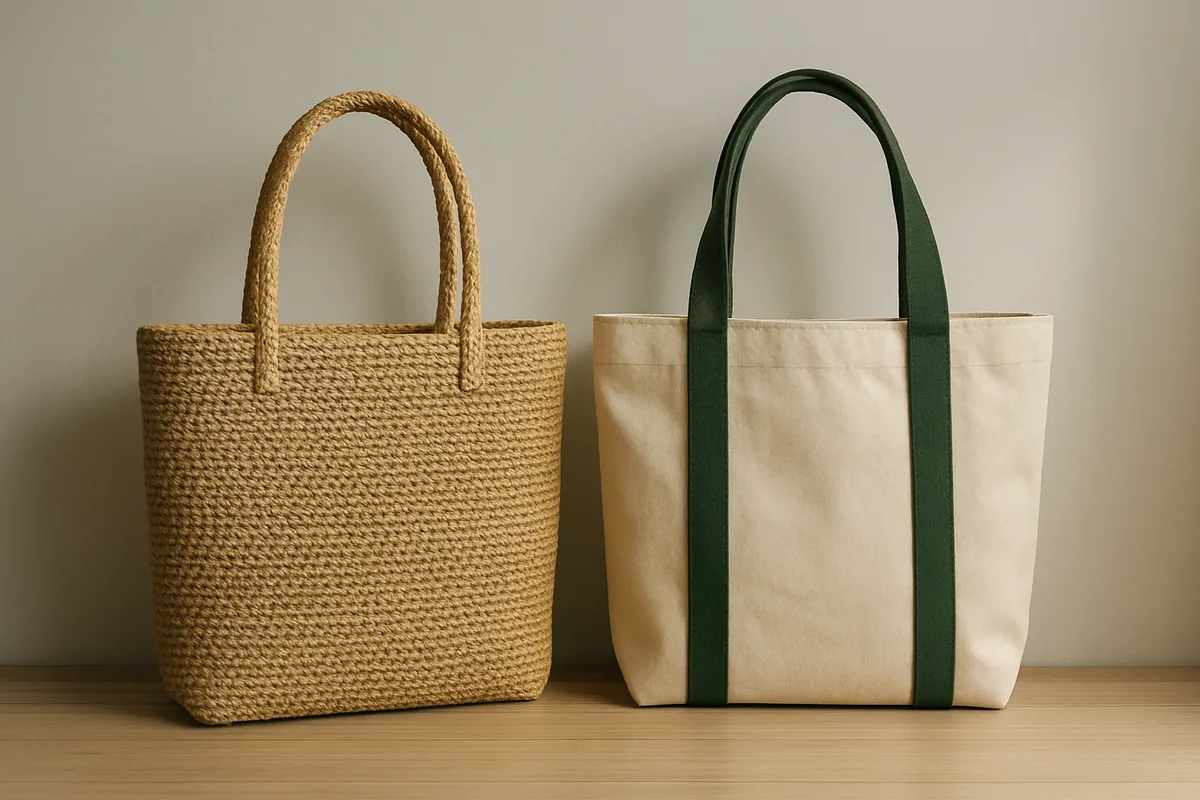
After comparing the main styles, two useful perspectives are designer choices and warm-weather settings. A brand overview can help you assess how design details and construction suit different routines, from carrying essentials on a commute to choosing a small bag for an evening out. Beach and basket styles bring season and capacity into the decision, especially when a towel, book, or market purchases need room. Separate guidance on raffia bag care covers the effects of sun, water, humidity, and regular handling.
Designer Raffia Bags
A designer overview is useful for comparing how labels interpret the same basic accessory, rather than treating a name as a guarantee of performance. Look at visible details such as handle attachments, edge finishing, lining, closures, and the placement of leather or metal trim. These choices affect how a bag feels in use: a secure closure can suit crowded travel, while a light, open interior may be more convenient for quick errands.
Match those details to the job you expect the bag to do. For a workday, check whether the opening accommodates items you carry regularly and whether the handles sit comfortably over a coat. For dinners or events, consider a compact profile, a reliable fastening, and decoration that works with the rest of your outfit. Comparing design language alongside these practical details makes the label overview relevant to your own priorities.
Beach and Basket Styles
Beach and basket styles are best considered through their setting and intended load. A broad, roomy silhouette may make sense for a beach day when a towel, book, and sun-care items travel together; a smaller basket-shaped bag can suit a walk through town or a market stop. The proportions also change the look: a taller profile reads differently from a wide base, even when both have a woven exterior.
Season matters because these bags are often chosen for warm-weather trips, outdoor meals, and weekends away. Think about how the bag will be carried alongside other luggage, and whether its opening and capacity fit the items you actually bring. The separate care guidance addresses exposure to sunlight, water, humidity, and everyday handling, all relevant conditions for a bag used outdoors. That context helps distinguish a seasonal companion from a style intended for more frequent use.
Raffia Bag Materials
Glossary of raffia bag terms: weaving and crochet techniques, raffia versus rattan and paper straw, lining and hardware words, defined with examples.
Raffia Bag Shapes
What a raffia clutch is, the common formats from envelope to pouch, what fits inside, and which occasions, outfits and seasons suit it best.
Care for the Woven Surface
Where to Go Next in This Guide
After comparing the main styles, two useful perspectives are designer choices and warm-weather settings.