
Definition
Product names can be broad, so the word clutch alone may not tell you how a particular bag is made or carried. Look beyond the label to the construction details and product photos, especially views of the strap and interior. Those details help you compare compact bags without assuming that similar-looking designs have the same finish. A clear definition gives you a practical starting point before choosing a style.
What Counts as a Raffia Clutch
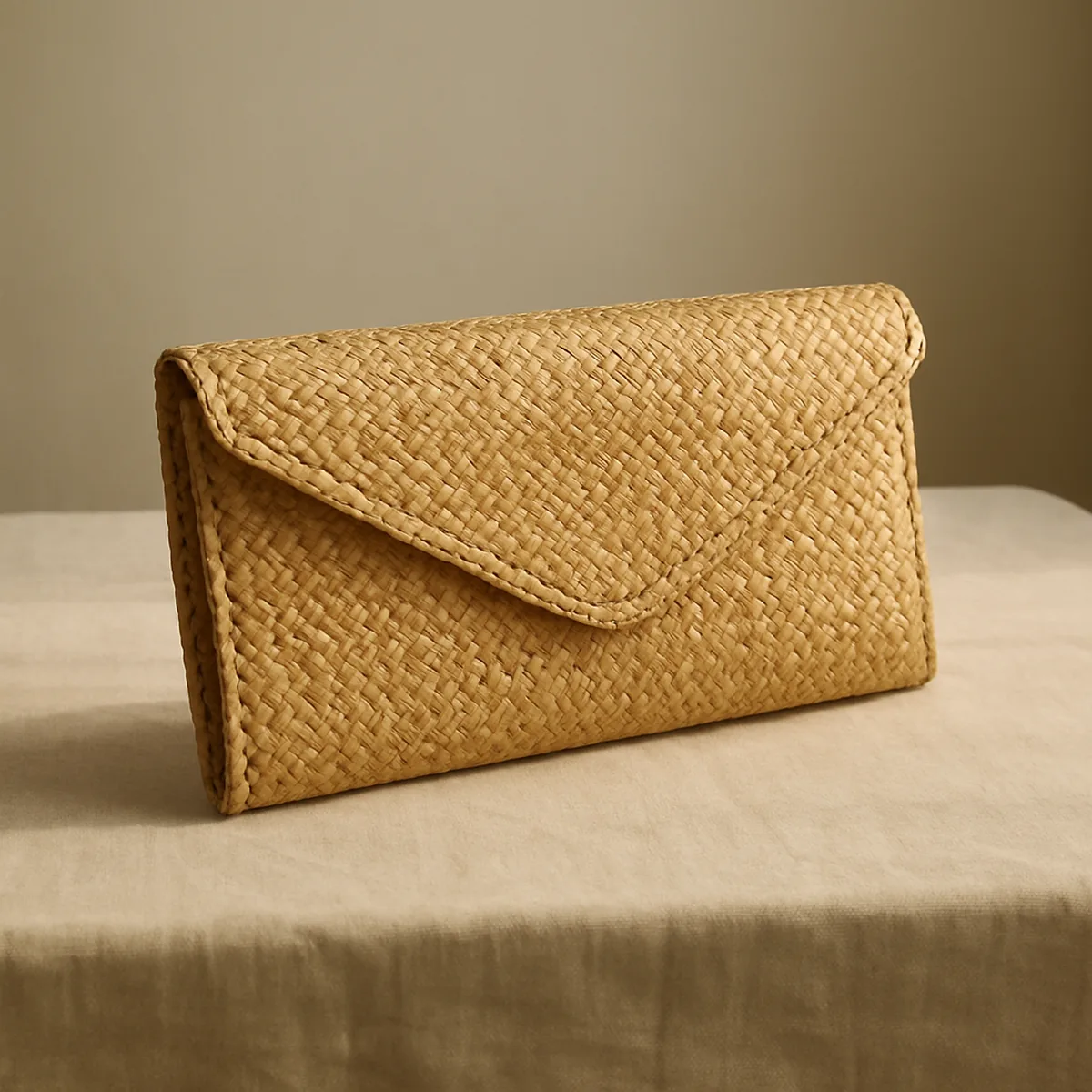
A raffia clutch is a compact bag designed to be carried in your hand or secured by a short wristlet strap. Its defining feature is the carry method: it does not rely on a shoulder strap for routine use, though some designs include a detachable wrist loop. The interior is small, with room for a limited set of personal items rather than the capacity of a tote or shoulder bag. The exterior is commonly woven from raffia, a plant fiber used to create a textured surface; edges, closures, or handles may use other materials. Many styles have a leather or fabric lining that covers the inside of the woven shell and forms a finished compartment. Lining details matter because they affect the feel and organization of the interior, while the outer weave alone does not tell you how the bag is finished. Product photos can make a bag appear larger or more structured than it is, so look for measurements and interior views in the listing. Before choosing one, check whether you prefer hand carry or a wristlet, whether the stated interior space fits your essentials, and whether the lining is leather or fabric.
Common Formats
Raffia clutch styles differ mainly in how their construction handles the items inside. An envelope lies relatively flat, while a pouch gives soft objects more room to settle. A box clutch has a firm body that keeps its outline around more structured contents. Comparing these shapes makes it easier to choose a bag that fits what you plan to carry.
Envelope
An envelope clutch has a flat body and a folded flap, creating a slim profile that sits neatly under the arm. Its limited depth makes it a good match for a phone that fits its dimensions, a card holder, folded cash and a few sheets of paper; bulky objects can make the flap difficult to close.
| Format | Structure | What it holds |
|---|---|---|
| Envelope | Flat body with a folding flap | Phone, card holder, folded cash, and flat papers |
| Pouch | Soft, flexible body, often gathered or zipped | Soft items, a compact wallet, keys, and small cosmetics |
| Box clutch | Firm sides and a shape-retaining frame or shell | Structured card case, keys, and carefully arranged small items |
Choose an envelope when a low-profile shape matters more than extra depth. Its best-fit contents are flat essentials: a slim phone, cards, folded notes, and a ticket or invitation.
Pouch
A pouch uses a softer body that can bend around what is inside, rather than holding a fixed outline. Depending on its closure and lining, its flexible sides can make room for a compact wallet, keys, a small cosmetic item, or another soft object that would make an envelope bulge. The contents still need to fit the pouch’s opening, so a wide item may be awkward even when the body has spare room.
This flexibility is useful when the carried items vary from outing to outing or include rounded shapes. Compared with a flat envelope, a pouch accepts more depth; compared with a box clutch, it offers less protection for objects that need to stay in a precise arrangement.
Box Clutch
A box clutch has firm sides, so its exterior keeps a defined shape even when it is set down or carried. That rigid structure can help keep a structured card case, keys, and other small, firm items arranged rather than pressed together by a soft bag. Check the opening and interior layout before choosing one: a narrow mouth or divided interior can limit what fits.
Its shape-retaining shell usually gives less flexibility than a pouch, which can accommodate objects with uneven outlines. Capacity depends on the individual design, but the fixed walls do not stretch to make extra room. Choose a box clutch for items that benefit from an orderly interior; for soft or bulky contents, a pouch is the more adaptable choice.
Where a Raffia Clutch Fits
The woven surface brings a relaxed note to warm-weather dressing, but it can also complement more considered outfits. The best match depends on the event’s dress code, the materials and colors in your clothes, and the finish of the bag. A natural woven handbag often feels at home at outdoor gatherings and summer celebrations. For settings that call for a smooth, highly polished look, another style may fit better. Use the occasion’s level of formality as the guide.
Daytime Events
A raffia clutch bag suits daytime gatherings with an informal or smart-casual dress code. Pair it with light, relaxed clothing and let its texture add contrast without dominating the outfit.
- For a garden lunch or farmers’ market gathering, choose relaxed linen trousers, a cotton shirt, or a simple sundress; the clutch suits informal-to-smart-casual dress codes.
- At brunch or an outdoor gallery visit, pair it with a light midi dress or a skirt and fine-knit top, keeping silhouettes easy rather than ceremonial.
- Let the weave sit beside breathable textures such as linen, cotton poplin, or a fine-knit layer; avoid competing with heavily patterned fabrics.
- Build color balance around one warm neutral—ivory, tan, or soft brown—then add a single muted accent such as sage, rust, or pale blue.
- For a printed outfit, pick up one quiet shade from the print instead of matching the raffia exactly; this keeps the natural texture visible.
- Check what the gathering requires: a phone, slim cardholder, keys, and sunglasses may fit, while bulky cases or additional essentials may call for a larger bag.
For a relaxed daytime look, keep the clothing breathable and the colors composed. Choose another bag if the event calls for more capacity than a clutch can provide.
Summer Evenings
A summer raffia clutch can work with tailored separates and dressier evening clothes when its shape and finish feel intentional. Use these details to keep the woven texture in balance with the occasion.
- Choose a defined envelope shape with a linen-blend suit or tailored trousers; its clean outline complements structured clothing without making the outfit feel overly formal.
- For a fluid evening dress, a softly rounded clutch can echo the movement of the fabric; keep the silhouette simple if the dress has prominent details.
- A smooth finish or discreet leather trim gives the woven surface a more polished appearance, while conspicuous fringe or oversized embellishment reads more casual.
- Match the bag’s finish to the outfit’s level of formality: understated raffia works for a summer dinner, but very formal dress codes usually call for a smoother bag.
- Coordinate jewelry and shoes by tone rather than matching every material; warm metal details pair naturally with tan raffia, while cool-toned accents suit pale or gray outfits.
- For a wedding reception or evening event, check the dress code and carry only essentials; the clutch is best when the invitation does not require a highly polished finish.
Let the bag’s shape echo the outfit and keep its finish in step with the dress code. Woven texture suits a dressed-up summer evening best when the event is celebratory rather than strictly formal.
Common Misconceptions
Raffia’s visible weave can suggest an informal accessory, but texture alone does not determine how polished a clutch looks. Shape, finishing and the clothes around it all affect whether it suits a dressier setting. Durability also depends on construction details such as joined edges and lining, not simply on the bag’s dimensions. A closer look at these details gives a more useful basis for judging a raffia clutch bag.
Raffia Is Not Always Casual
A raffia clutch can look dressy when its silhouette holds a clean line rather than slumping or bulging. A firm base, defined corners and even edges give the weave a deliberate finish; a smooth, neatly fitted lining also keeps the interior from looking unfinished when the bag opens.
Styling matters just as much. Keep the overall palette controlled, match the bag’s scale to the outfit, and let the woven texture serve as one considered detail rather than competing with several other statement surfaces. A refined raffia evening bag can suit a cocktail reception or an outdoor celebration when its shape and finish feel intentional.
That does not make raffia right for every formal dress code. For black-tie events or settings that call for a sleek, uniform finish, polished leather, satin or another smooth material is usually the safer choice. The distinction is between a textured accessory that looks carefully finished and one whose relaxed surface conflicts with the formality required.
Small Does Not Mean Fragile
Compact dimensions do not establish whether a clutch will last; the weave, assembly and handling all matter. Before choosing one, inspect these points:
- Weave: look for consistent tension, with no loose strands, visible gaps or areas that pull away when the body is gently pressed.
- Seams and edges: check that joins lie flat and edges are securely finished, without fraying, exposed cuts or uneven stitching at the corners.
- Closure: open and fasten the clasp or zip several times; it should align cleanly and work without snagging the raffia or forcing the frame.
- Lining attachment: inspect the opening and interior corners for a lining that sits smoothly, with no loose threads or detached sections catching small items.
- Care and handling: avoid overfilling, keep sharp keys in a separate sleeve, and store the bag dry with its shape supported rather than compressed.
These checks reveal more than size can: a compact bag with an even weave, secure joins and a well-fitted lining is a more reassuring choice than a larger piece with weak finishing. Assess its structure and finish in person instead of assuming that every small clutch is fragile.