
What a Beach Bag Has to Handle
A raffia beach bag encounters loose grit, salty air, strong sunlight and damp belongings during a typical shore outing. These conditions affect the woven fibers in different ways: sand gets caught between strands, while salt and sun can dry them over time. Raffia is a natural plant fiber, so it does not provide the sealed protection of a waterproof synthetic bag. Knowing what happens after each trip helps keep a woven beach bag comfortable to carry and in good condition. Simple cleanup and careful drying address the main challenges without treating the bag as waterproof gear.
Sand and Salt
Open raffia weaves have gaps where fine beach sand can settle between strands, especially around the base and seams. Grains may fall out as the bag moves, but some remain caught in the weave and can feel gritty against a towel or clothing. After each outing, empty the bag and turn it upside down outdoors; a few gentle shakes release loose particles without pulling at the fibers. Use a soft, dry brush to sweep remaining sand from the weave, working with the direction of the strands rather than forcing bristles into gaps. Salt carried in sea air can settle on the surface, and repeated exposure may leave raffia drier and less supple. A dry brush can lift loose residue, while rubbing with a wet cloth may push grit further into the weave. Regular, gentle cleaning is more suitable than hard scraping, which can catch or loosen individual strands.
Sun and Heat
Strong sun gradually dries natural raffia and can fade its color, particularly with repeated, prolonged exposure. A short walk from the car or a few hours outdoors is different from leaving the bag in direct sunlight for an extended period; cumulative exposure is what makes the fibers look paler and feel drier. Color may also fade unevenly if one side faces the sun each time. When the bag becomes wet from splashes or damp belongings, let it air-dry fully in shade instead. Direct sun can dry the outer strands faster than the interior, leaving moisture inside the weave while the surface becomes stiff. Keep the bag open during shaded drying so air can circulate through it. Routine use outdoors is normal, but shade is the better choice for drying a wet raffia bag.
Wet Items
Raffia is not waterproof: water can pass through an open weave, and wet swimwear can leave the fibers damp where it touches them. A damp towel or swimsuit stored directly against raffia also slows drying, especially when folded tightly inside the bag. Use a lining or a separate waterproof inner pouch to keep wet items apart from the woven fibers; a pouch is useful when the bag itself has no lining. Keep the pouch closed around swimwear and remove it when you unpack, so moisture is not held against the raffia between outings. If the bag itself gets wet, empty it and allow it to dry in shade with the opening unobstructed. For beach trips, separate wet contents from dry belongings and use the bag as a carrier, not waterproof storage.
Beach Bag and Basket Styles
The shape of a beach bag determines how easily you can pack bulky items and reach what you need. An open tote gives the widest access, while a round basket bag holds its form and suits a more compact load. Lids and zips contain smaller belongings but narrow the opening. Compare the space you need with how quickly you want to reach your towel, bottle, or book.
Large Totes
A large raffia tote has a broad, open top and a roomy body, making it useful when a beach day calls for bulky items. A folded towel, a change of clothes, and a bottle can sit together without needing to pass through a narrow opening. The uncomplicated shape also makes it easy to see and retrieve items near the top.
Capacity depends on width, depth, and how much the sides hold their shape; a spacious beach tote can take a larger load than a compact basket, but an oversized bag may be awkward when only carrying a few essentials. If you plan to pack a towel and bottle, look for an open tote with a stiff base so it stands more steadily when set down. If you usually carry only a book, sunglasses, and a small bottle, a smaller shape may be easier to manage.
The open top is also a trade-off: loose sand or a spilled drink can reach the contents more readily than in a bag with a closure. Choose this style when quick access and room for bulky beach items matter more than containing everything. A woven beach bag with a generous opening suits a flexible load, but it offers less separation from the surroundings.
Round Basket Bags
A round raffia basket bag usually has a defined shape that keeps its outline even when it is not full. Its capacity is more dependent on the basket’s depth and opening than on its overall width: a shallow, wide design may hold a towel on top, while a deeper one can fit smaller items below it.
| style | what it suits | limits |
|---|---|---|
| Large tote, often about 20–35 L | A folded towel, bottle, book, and spare clothing; the open top gives direct access. | The wide opening leaves contents exposed to loose sand and spills; soft sides may slump under a bulky load. |
| Round basket bag, often about 10–20 L | A compact towel, sunglasses, book, and smaller personal items; the firm outline helps keep the shape. | The curved body and narrower opening can make large towels or broad objects harder to pack. |
| Bag with lid or zip, often about 10–25 L | Smaller belongings that benefit from a contained opening, such as a book, bottle, and wallet. | The closure can reduce usable access, and bulky items may not pass easily through the opening. |
These ranges are approximate rather than fixed: two bags with similar outer dimensions can differ in depth and usable space. Choose a round basket bag when a defined shape and a compact load suit your plans; for a bulky towel, check the opening width as well as the stated capacity.
Bags with Lids or Zips
A lid or zip brings the opening together, helping keep smaller contents contained as you move between the beach and other stops. A lined raffia basket bag with a zip, for example, can be useful for carrying a book, wallet, and bottle without leaving the top fully open. A lid offers a covering panel; a zip closes the opening more completely, although the result depends on how the bag is constructed.
The trade-off is access. You need to undo the closure before reaching inside, which can feel slower when you are repeatedly taking out a bottle or sunglasses. A restricted opening also changes what will fit: a rolled towel may slide through, while a wide, folded towel or a large beach mat may not. The bag’s listed volume alone will not tell you whether an item can pass through the top.
If most of your load consists of smaller essentials and you prefer a contained opening, a lid or zip can be a practical choice. If you carry bulky items or want to reach in quickly, choose a wider opening instead. For a mixed load, check that the largest item fits through the opening before settling on a style.
Features That Matter
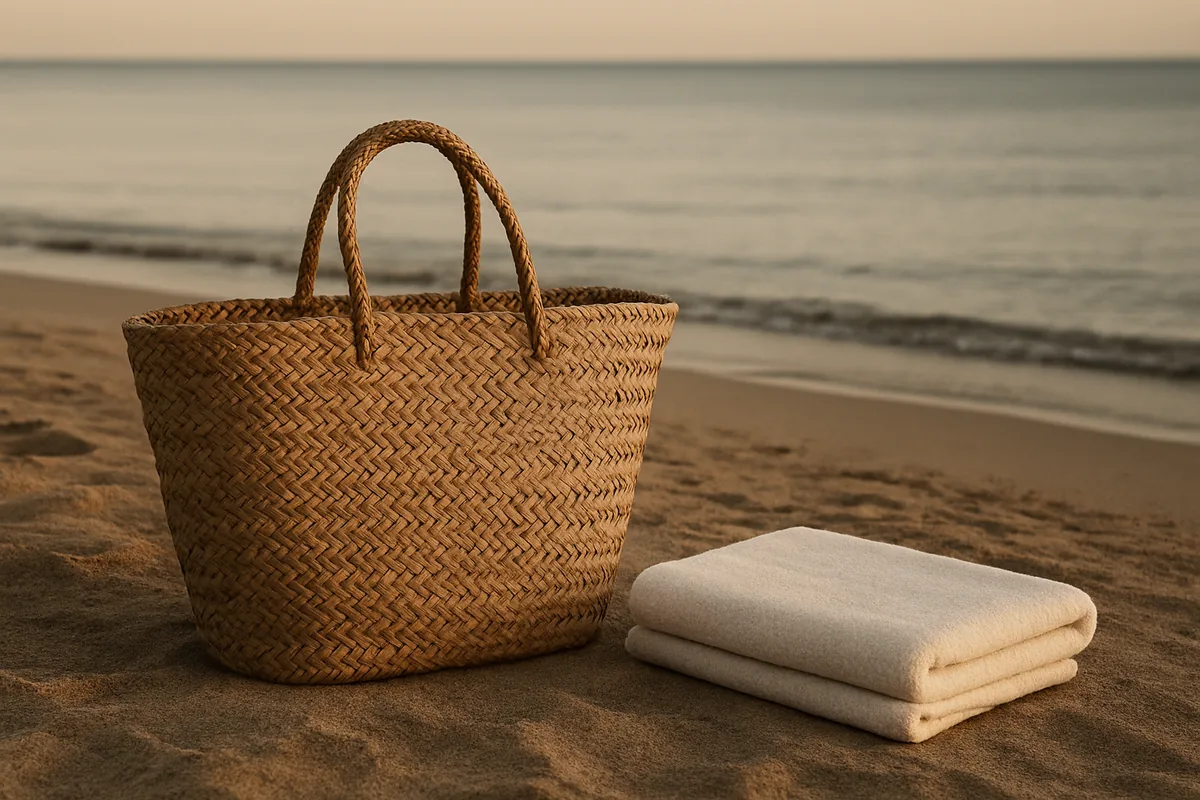
Lining, handles and base shape determine how a raffia beach bag carries its load and keeps everyday belongings in place. Their value depends on what you pack, how far you carry it and whether you need the bag to stand upright. A few small details can make a lightweight summer handbag easier to use without changing its woven character. Choose features to match your actual beach-day load rather than assuming every bag needs the same construction.
Lining
A lining gives small belongings a continuous inner surface instead of leaving them against the gaps in an open weave. Keys, cards, lip balm and earbuds are less likely to catch on raffia strands or slip through a loose section. It can also help keep the contents together when you reach into a roomy raffia beach bag.
Check whether the lining covers the full interior, including the base, and whether its seams sit flat rather than bunching around the opening. A fully lined bag is useful if you carry several small items; a partial lining may be enough when your load consists mainly of a towel and a book. Fabric lining can separate belongings from the weave, but it does not make raffia waterproof. Moisture can still enter through the opening, seams or woven exterior, so choose the lining for containment and organization, not as protection for a phone or other water-sensitive item.
Handles
Handle construction matters most when a bag holds dense items such as a full water bottle, sunscreen and books. Check how the handles are joined to the body, then consider their length and width for your usual carrying position.
- Look for broad tabs, reinforced patches or handles woven securely into the body; a narrow attachment sewn only to the surface concentrates force at one point.
- With the bag empty, lift it gently by each handle and inspect the joins for loose threads, gaps or movement where the attachment meets the weave.
- A short handle drop keeps the bag close to the hand or forearm, while a longer drop can fit over the shoulder; test the fit with your usual clothing.
- Wider handles distribute pressure across more of the hand or shoulder than thin cords, which can feel uncomfortable when the bag contains several heavy items.
- Examine stitching for even, closely spaced rows without skipped sections; at stress points, secure stitching helps keep fabric tabs from pulling away.
- For a light towel and cover-up, simpler handles may be sufficient; frequent carrying of dense contents calls for stronger attachments and a comfortable grip.
Heavier contents increase strain with every lift, especially at the handle joins. If your typical load is substantial, choose a handwoven raffia tote with reinforced attachments and handles that sit comfortably on your shoulder.
Base and Shape
A firm base supports the bag when it is set down and helps it stand instead of folding into a heap. That can make it easier to reach a towel or sunglasses without tipping everything out. A structured basket bag often holds its outline better than a soft, unreinforced tote, although a firm base adds less value if you carry only a few light items.
Shape affects stability as well as appearance. A broad, flat base generally gives a loaded bag a steadier footprint than a narrow base, while a rounded bottom may rock when the bag is placed on an uneven surface. Consider the opening too: a bag that stays upright and has sides with enough structure is less likely to slump inward and let belongings shift toward the opening. If you pack several items that need to stay in place, choose a stable base and sides that retain their shape; for a light, flexible load, a softer form may be easier to carry and store.
Mistakes at the Shore
A raffia beach bag can lose its shape or finish when it is mishandled. Two common causes are carrying more than the weave can support and leaving the bag in intense heat. Small habits, such as checking the load before leaving and choosing a shaded place to set it down, help limit avoidable wear. Treat the bag gently when it is damp, too.
Overloading
Excess weight can pull at the handles and stretch the woven body, while an uneven load may twist the base or leave the bag misshapen. Use these simple checks before carrying a full raffia beach bag.
- Weigh a typical packed bag at home; if it feels heavy to lift comfortably, remove nonessential items rather than relying on the weave to bear the strain.
- Place dense objects, such as a water bottle, near the center and close to the base so their weight does not pull one side downward.
- Keep hard or bulky items from pressing against a single wall; wrap them in a towel or place them between softer belongings.
- Carry heavier items separately, especially for a long walk from a car park, and avoid swinging the bag, which adds repeated jerks to the load.
- Empty the bag after each outing and check for stretched areas or a newly uneven shape before packing it again.
There is no universal weight limit for every weave, so follow the maker’s guidance when available. A lighter, balanced load is the safer choice for preserving the bag’s shape.
Leaving It in the Sun or Car
Prolonged, strong sunlight can dry raffia fibers and fade their color, particularly when a bag is left exposed for hours. Set it under a beach umbrella or in another shaded spot between uses; do not leave it on hot sand or beside a sunlit window. Shade reduces direct exposure, though it does not make a bag suitable for indefinite outdoor storage.
A parked car can add concentrated heat: on a warm, sunny day, the cabin may climb above 50°C. That heat can make raffia drier and more brittle over time, while a bag pressed against a hot surface may take on extra stress. Bring the bag indoors rather than leaving it in the passenger area or trunk, even for the rest of the afternoon.
If the weave gets wet, gently shake off excess water and let the bag air-dry in a shaded, well-ventilated place. Keep it away from radiators, hair dryers, and direct sun, which can dry it unevenly. A cool indoor spot is the best choice: protect the bag from both harsh sunlight and trapped car heat.