
The Short Difference
A tote’s material describes its primary body, not necessarily every component. Raffia begins as plant fiber, canvas as woven yardage, and leather as tanned hide. Each must be formed and joined to create a carryall, with design choices shaping the finished result. Identifying those starting materials makes a tote bag material comparison more precise.
What Each Material Is
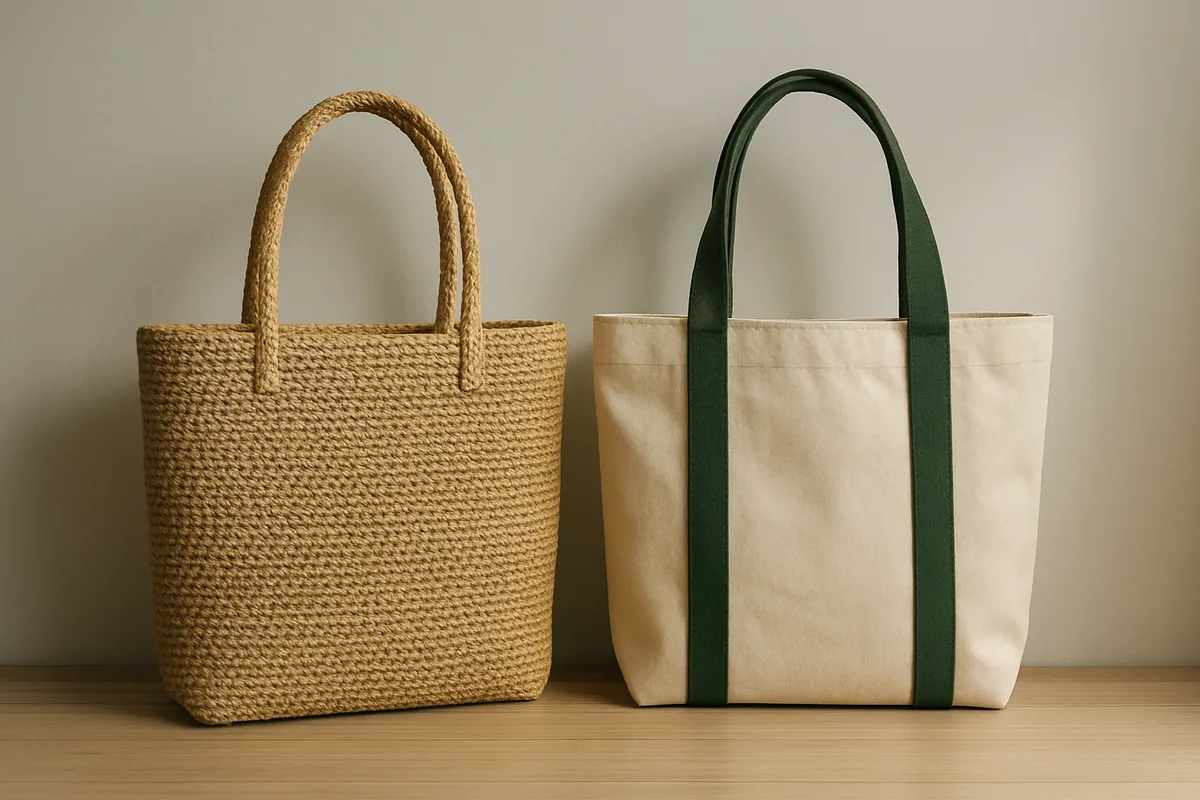
Raffia is natural fiber from raffia palm leaves; strands are woven or worked into a flexible sheet and shaped into a tote body. Visible interlacing creates the woven raffia bag texture; binding or a fabric lining may finish its edges and interior. Canvas is a woven textile, often cotton, made from intersecting yarns; its panels are cut and sewn into a bag. Leather is animal hide tanned into a workable sheet, then cut and joined; folds or gussets form the tote’s volume. Weave density, strand or yarn thickness, hide finish, seam placement, handle attachment, lining, and reinforcement affect the finished bag. For a raffia tote bag comparison, consider construction as well as material: two totes made from the same material can have different shapes and finishes. The material name alone does not define how panels are assembled.
Comparison Table
A raffia tote bag comparison with canvas and leather is most useful when it considers the finished bag, not just its raw material. Dimensions, lining, weave, reinforcement, hardware and finish can change how a tote feels and performs. The table summarizes practical differences, while the notes explain what to look for in construction and care. Treat weather performance as a feature of the specific bag rather than a guarantee of its material.
Weight
A woven raffia tote may feel light when it has an open weave, minimal lining and simple handles, but a dense weave or substantial base can add weight. Canvas weight depends on the cloth’s thickness, seams, lining and hardware; a large, reinforced canvas bag can outweigh a compact raffia one. Leather also varies: hide thickness, bag dimensions, lining and metal fittings all affect the carry weight. Compare similar-sized finished bags, and check handle construction, since layered straps and reinforced attachments add material. Fiber or hide alone cannot reliably predict which tote will feel lighter when empty.
Structure
Woven raffia holds its shape according to weave density, panel construction and any lining or base insert. A loose weave can flex and soften in use, while tightly woven panels with reinforced seams may retain a more defined outline. Canvas structure comes from cloth weight, seam placement, lining and reinforcement at the base and handles; unlined styles often fold more readily. Leather’s body depends on hide thickness, temper, panel design and stitching, so it can range from supple to firm. For any material, an upright tote needs a construction that supports its base; the material name alone does not mean it will stand on its own.
Weather Tolerance
Drizzle and splashes can affect all three materials, but the result depends on the finish and how the bag is built. Water may darken natural raffia fiber or leave marks, especially where moisture reaches an unlined weave. Canvas can absorb dampness, and wet seams or a saturated lining may take longer to dry. Leather may spot, stiffen or change appearance after getting wet, with the effect varying by leather type and treatment. A surface finish can improve resistance, but it should be verified for the specific bag; raffia, canvas and leather are not inherently waterproof. In damp conditions, wipe away surface moisture promptly and let the tote dry naturally, away from direct heat.
Care
This tote bag material comparison is a quick guide; follow the maker’s instructions for the specific finish and construction.
| Feature | Raffia | Canvas | Leather |
|---|---|---|---|
| Weight | Varies with weave, size and lining. | Varies with cloth weight, size and hardware. | Varies with hide, size and fittings. |
| Structure | Depends on weave, seams and reinforcement. | Depends on cloth, lining and base support. | Depends on hide, panels and stitching. |
| Weather tolerance | Finish and construction affect response to moisture. | Finish and construction affect response to moisture. | Finish and leather type affect response to moisture. |
| Care | Use gentle, surface-level cleaning. | Follow the care label for cleaning. | Dry gently and condition as appropriate. |
For raffia, lift dust with a soft, dry brush or cloth; avoid soaking or scrubbing the woven surface. For canvas, follow the care label, since washing methods vary with dyes, linings and finishes. If leather gets damp, blot it with a clean cloth, let it air-dry away from heat, then use a compatible conditioner if needed. Choose the tote whose construction and upkeep suit your routine, rather than relying on material alone.
When a Raffia Tote Is Better
A raffia tote is most at home in conditions that suit its woven construction: dry weather, relaxed plans and a modest load. The right choice depends on more than the fiber; bag size, weave density, lining and handle attachment all affect how it performs. An open weave can complement summer clothing, but it offers less coverage than a closed fabric surface. Shape retention also varies, especially when a tote is packed beyond its intended capacity. Consider the day’s weather, contents and outfit together before choosing one.
Warm Weather and Casual Days
A raffia tote works well for a lightweight summer tote bag when the day is dry and the outing is informal. Its woven surface brings texture to relaxed clothing, though it does not shield contents or hold a crisp outline as reliably as a closed, structured bag.
- Choose dry forecasts for open-weave styles; gaps between strands can leave small items exposed to splashes and provide little barrier against sustained rain.
- For a café visit, farmers’ market or short walk, the relaxed shape suits plans where a soft-sided bag does not need to stand upright.
- Pair the woven raffia bag texture with linen, cotton dresses or simple shorts; smooth, uncluttered outfits let the open pattern read clearly.
- Pick a compact or medium tote for casual errands when the contents are limited, rather than filling a large bag until its sides pull out of shape.
- Check the actual construction: a closer weave, fabric lining and securely attached handles can improve coverage and support, but do not make every raffia tote equally protective.
The trade-off is reduced protection: an open weave can expose contents to dust or drizzle, and a soft body may slump when set down. For casual outings in dry conditions, choose a well-finished tote whose shape and coverage match what you plan to carry.
Light Loads
A raffia tote can suit a small daily carry: a phone, wallet, keys and a light layer leave less weight pulling on the body and handles. This kind of load also suits a relaxed silhouette that does not need to keep a rigid, upright shape. However, raffia totes vary: a smaller bag with a dense weave, lining and reinforced handle attachment may support its contents differently from a larger, loosely woven style. As the load grows, the base can sag, the sides can stretch out of shape and narrow or weakly attached handles can feel strained. Avoid treating capacity as a measure of strength; look at the weave and handle construction, then keep heavier items out. For essentials and one light layer, a compact, well-constructed tote is the practical choice.
When Canvas or Leather Is Better
Canvas or leather may suit a tote better when its job involves repeated carrying or regular trips through damp weather. The right choice depends on the bag’s construction as much as its material: stitching, lining, closures and finish all affect performance. A sturdy canvas tote can handle everyday use, while a well-made leather tote offers a different balance of support and upkeep. Compare the details against what you carry and how you travel.
Heavy Daily Loads
For books, a laptop or groceries, assess the load-bearing parts rather than relying on the material name. A raffia tote bag vs canvas tote bag comparison is most useful when the bags have similar dimensions and construction.
- Reinforced handles: Look for handles secured with box stitching or reinforced patches; broad straps can distribute a heavy load more comfortably than narrow, lightly attached handles.
- Secure seams: Dense, even stitching at handle joins and side seams helps resist repeated pulling; inspect for loose threads or gaps before carrying daily essentials.
- Structured base: A firm, supported base helps keep books or a laptop from sagging into the corners, especially when the bag is loaded close to capacity.
- Usable capacity: Check the stated dimensions and whether the opening accommodates your usual items; a large volume is less practical if the closure cannot secure it.
- Material and build: Heavy canvas can be a practical choice when reinforced and well sewn; leather can support a substantial load when its handles, seams and base are designed for it.
Canvas tote bag durability and leather tote bag durability both depend on these construction details, plus how often the bag is carried at full capacity. Choose the bag with documented load guidance and robust attachment points; neither canvas nor leather alone guarantees suitability.
Rain and Commuting
For a damp commute, check the finish and construction of a canvas tote before assuming it will protect its contents. Waxed or otherwise treated canvas can shed light rain more effectively than untreated canvas, but seams, stitching and an open top can still let water enter. A zip or a well-fitting flap helps limit exposure; keep a laptop, paper documents and other sensitive items in a separate waterproof sleeve.
Leather also varies: a protective finish may resist brief splashes, while untreated or absorbent leather can darken, spot or develop water marks. Prolonged wetting may distort leather as it dries, so blot surface water with a clean cloth and let the bag air-dry away from direct heat. Canvas should likewise be dried fully before storage to reduce the chance of mildew or lingering dampness. Neither a treated surface nor a closed top makes a tote waterproof. For frequent rainy trips, prioritize a secure closure and a dedicated waterproof liner or sleeve; choose canvas or leather based on the care you are prepared to give it.
Choosing by Situation
The right tote depends on what you carry, how securely it needs to travel, and where you will use it. A lightweight raffia tote can suit a short, low-load outing, while canvas or leather may better match a more demanding routine. Consider whether your essentials need to stay flat, covered, or easy to reach. The best material for a tote bag is the one that fits the day’s actual load and setting.
Work
Choose canvas or leather if your work essentials include a laptop, folders, or several small items that need to stay upright; a raffia tote is better suited to a day with only a notebook and wallet. Defined sides and a reinforced base help documents lie flat, while a zip or flap keeps contents contained on a crowded commute.
Canvas is a practical choice for a relaxed office, especially when you want a less formal bag that can hold a laptop sleeve. Leather may suit client meetings or a dressier workplace where a polished finish and firmer shape fit the expected attire. Raffia works for casual settings when the load is light and an open top is acceptable; choose another material if your essentials need structured support or a secure closure.
Travel
For travel, choose according to how long you will carry the tote and what must remain protected. These criteria help balance convenience with the different trade-offs of raffia, canvas, and leather.
- Carry weight: For long terminal walks, a light raffia tote reduces the load; canvas and leather can feel more substantial before you add a water bottle or guidebook.
- Packability: A soft canvas tote usually folds into luggage more readily; a structured leather bag takes more room, while woven raffia may resist tight folding.
- Closure: Pick a zip or secure top for trains and busy stations. Many raffia styles have open tops, so check the design rather than assuming contents are covered.
- Valuables: Keep a passport, phone, and wallet in an interior zipped pocket or separate crossbody bag; an open weave offers less concealment than a lined, closed tote.
- Weather exposure: For a forecast with showers or frequent outdoor transfers, canvas is easier to choose than raffia; leather may handle splashes but still needs suitable care.
For a day of light sightseeing in settled weather, raffia keeps the carry easy; for mixed transport and changing conditions, a closed canvas tote offers a useful compromise.
Beach
Choose raffia for a light beach carry: a towel, sunscreen, sunglasses, and a book fit the casual feel of a woven bag, and the open texture suits an easy trip from shore to café. It is less convenient when your towel is bulky, you are carrying several damp items, or you need a closure to keep small belongings together. Sand can settle between the woven fibers, so shake the bag out and use a soft brush rather than scrubbing the texture.
Canvas is more practical for a larger towel, spare clothes, or a packed family beach day because its fabric surface is easier to wipe or clean according to its care instructions. Keep damp items in a separate pouch to stop them transferring moisture to other contents. For a short outing with a dry towel and few essentials, raffia is a comfortable choice; for a heavier, messier load, choose canvas.